LOT 1, Ratnagiri Estate, India

LOT 1, Ratnagiri Estate, India
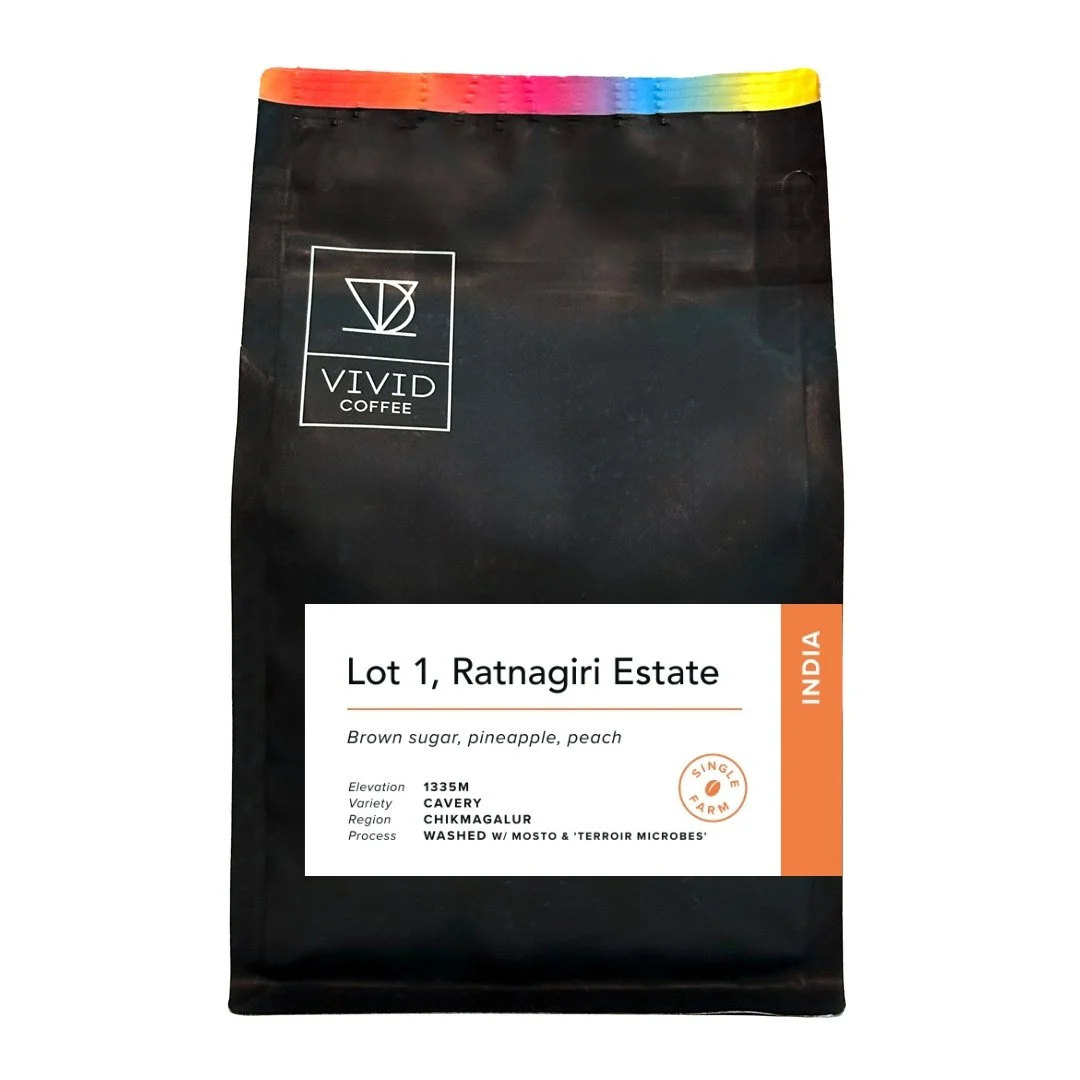
Lot 1 — Ratnagiri Estate, India
Cavery · 1,335 m · Washed w/ Mosto & Terroir Microbes
Chikmagalur, India
Tasting Notes: Brown Sugar, Pineapple, Peach
Lot 1 is a bright, elegant expression of Ratnagiri Estate and a fascinating look at the precision behind Ashok Patre’s approach to coffee fermentation.
The process begins with 46 hours of fermentation of intact coffee cherries. The cherries are then de-pulped and the coffee is fermented for an additional 32 hours using microbe-enriched mosto, or leachate—a nutrient-rich liquid naturally produced during the fermentation of clean coffee cherries. For this lot, that mosto was further enriched with “terroir microbes,” native microorganisms collected from leaf litter at Ratnagiri Estate and propagated specifically for use in fermentation.
After the second fermentation, the wet parchment was rinsed and slowly dried in a mechanical dryer at 36°C (96°F) for 33 hours.
In the cup, Lot 1 is beautifully balanced and expressive. Brown sugar gives the coffee a deep, rounded sweetness, while pineapple brings lively tropical fruit and peach adds a soft, juicy character. The result is a coffee that feels simultaneously familiar and distinctly unique to its origin and processing.
About Ratnagiri Estate
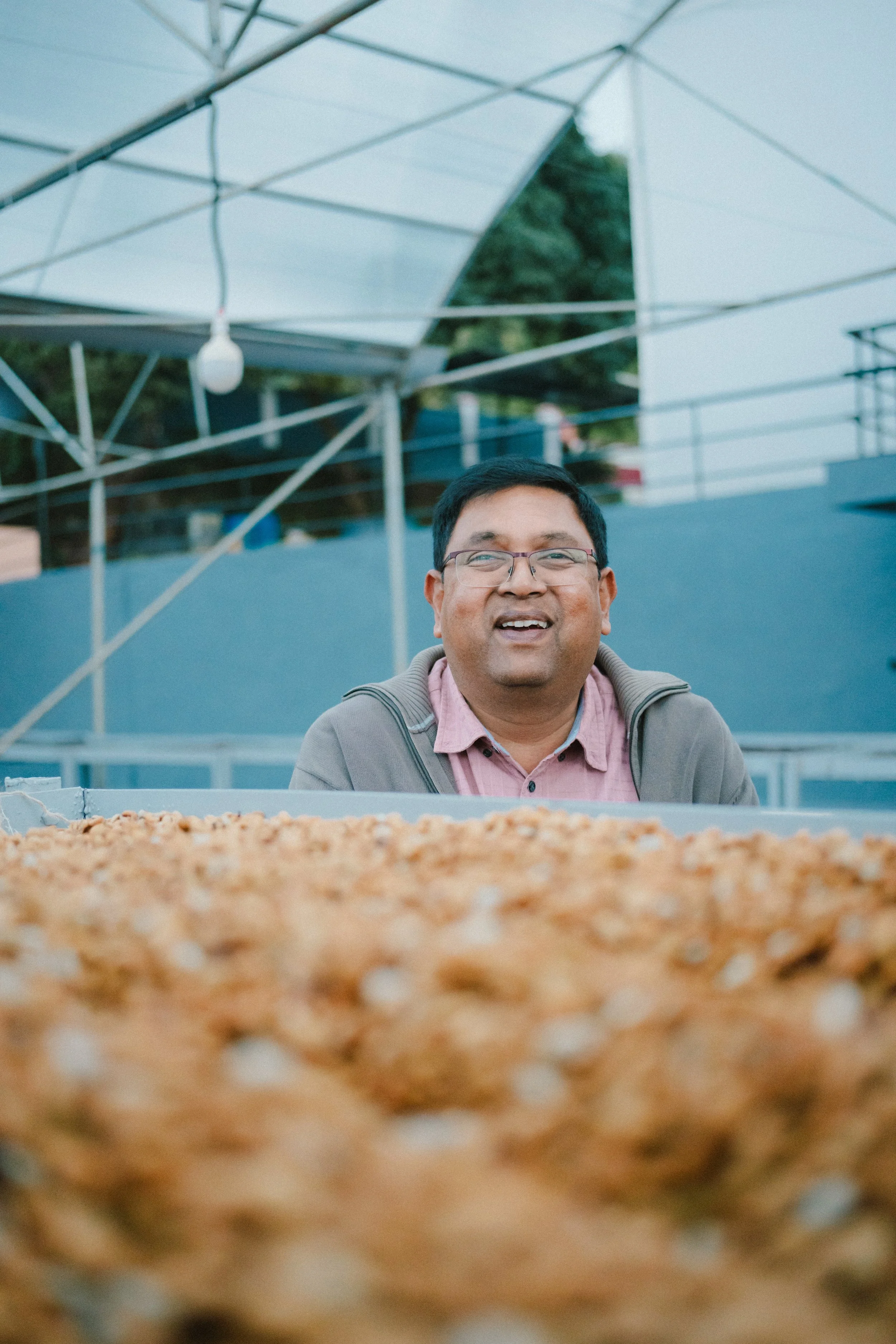
For nearly a century, the Patre family has stewarded Ratnagiri Estate in Chikmagalur, producing specialty coffee alongside fine pepper. Today, third-generation farmer Ashok Patre, together with his wife, Divya, is building on that family history while establishing Ratnagiri as one of the most innovative coffee farms in India.
Ashok has developed a deeply intentional approach to processing, using fermentation as a tool to explore and enhance the natural character of Indian coffee. His methods are informed by an understanding that different varieties, environments, and microbial communities can produce remarkably different results.
That philosophy has led Ratnagiri to become something of a living laboratory for coffee fermentation. Ashok has worked with food scientists to develop custom processing equipment, and his team includes two microbiologists who help monitor fermentations through microbial analysis and titratable acidity measurements. Each batch is carefully tracked, allowing the team to make informed decisions about how and when a fermentation should finish.
Lot 1 showcases what this approach can achieve: a clean, vibrant, fruit-driven coffee that reflects both the character of Ratnagiri Estate and the remarkable precision of its processing.